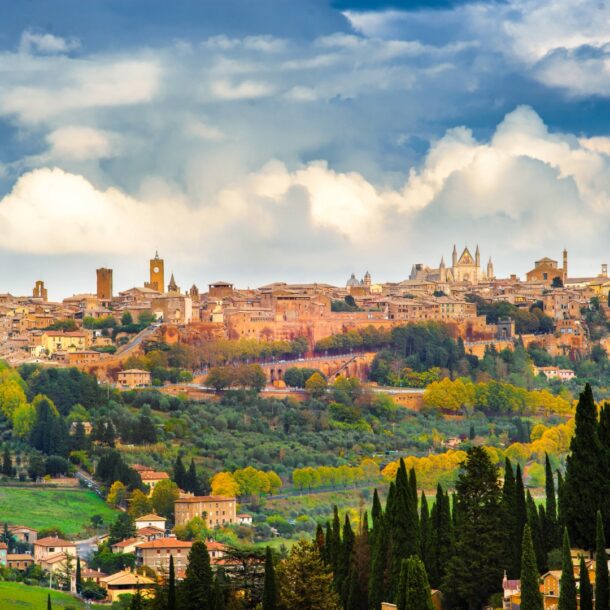
About an hour from the Convento San Bartolomeo, perched on a tuff cliff that defies time and the elements, lies Civita di Bagnoregio: one of the most fascinating and fragile villages in Italy, also known as “the dying town.” Its nickname is not a poetic invention but a reflection of a geological reality: for centuries, landslides and earthquakes have silently eroded the base of this village suspended in the void, threatening its very existence. Yet, it is precisely this fragility that forms part of its beauty.
To reach it, visitors must walk along a long reinforced concrete footbridge that seems to detach from the world and rise toward the sky. At the foot of the cliff, the Valley of the Calanchi opens up in all its rugged beauty, with clay ridges, crevices, and ancient silences. Once you pass through Porta Santa Maria—topped by two stone lions recalling old battles against the Monaldeschi family of Orvieto—you enter a place suspended in time.
History, Stone, and Legend
Civita di Bagnoregio is tiny, yet every corner tells a story. The visit begins at the Bagnoregio lookout point, offering a breathtaking view of the entire village and the cliff that supports it, marked by deep scars carved by time. Once inside the village, follow the stone-paved road.
At the heart of the town lies the main square, dominated by the Church of San Donato, where time seems to have stood still. Inside, a 15th-century wooden crucifix, according to local legend, spoke to a woman during the plague of 1499, announcing the end of the epidemic. Just a few steps away, the Geological and Landslide Museum tells the story of the village’s difficult coexistence with unstable ground and the ongoing efforts to preserve this threatened treasure.
In the Footsteps of Saint Bonaventure
Wandering through the quiet alleys, you reach the Grotto of Saint Bonaventure, an ancient Etruscan tomb carved into the tuff rock. According to legend, the young Giovanni Fidanza—later known as Saint Bonaventure—was miraculously healed there after his mother’s prayers to Saint Francis of Assisi. A “good fortune,” as the Saint of Assisi is said to have whispered, that changed the boy’s fate and left a lasting mark on the history of Western spirituality.
The Poet’s Garden
Among flower-filled balconies and stone houses, Renaissance palaces such as those of the Colesanti and Alemanni families emerge. The latter now houses the Geological Museum. At the far end of the village, perched over the valley, lies the Poet’s Garden—one of the most poetic and intimate spots in the village. This is a private space open to the public, where visitors can pause and soak in the beauty in silence. A small donation or the purchase of a local product helps support the upkeep of this special place.
Civita di Bagnoregio is an ideal day-trip destination from Convento San Bartolomeo. A scenic one-hour drive through gentle curves and green landscapes will take you from the heart of Mount Amiata to this enchanted village in Tuscia. Since 2013, access to Civita requires a paid entrance fee—an essential measure to fund maintenance and restoration efforts. It’s a tangible gesture of support for the survival of a place that risks disappearing with each passing day.
If you’re planning your stay with us, be sure to include Civita in your itinerary—it’s an experience you’ll carry with you forever.

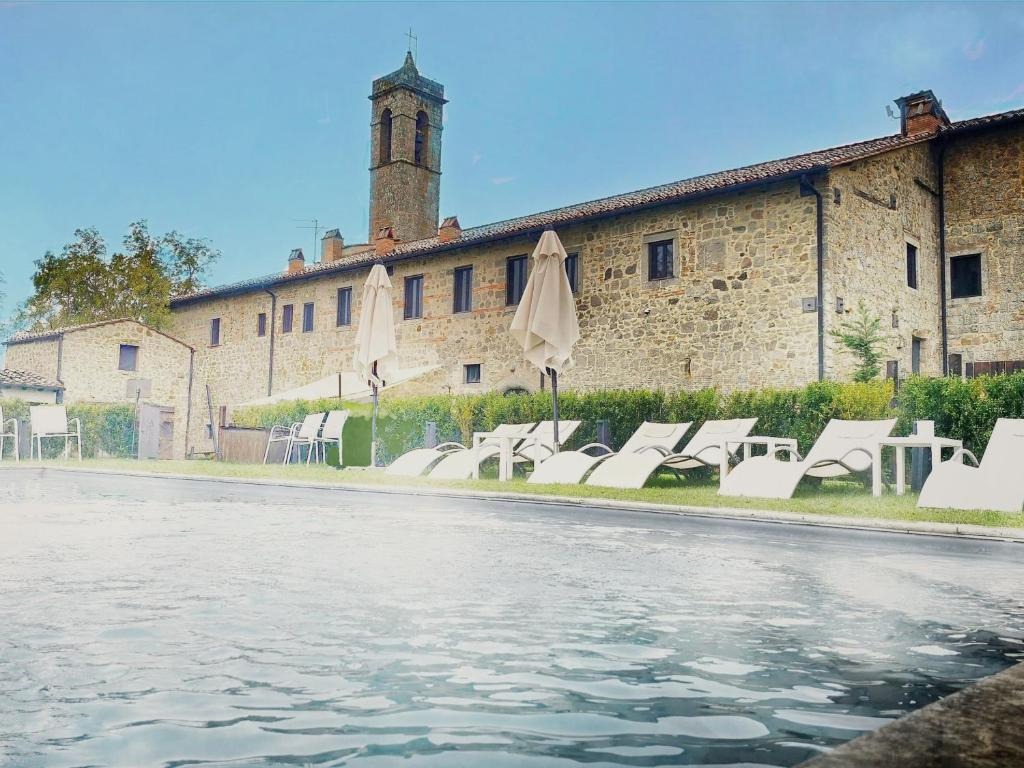
Warm water, a unique atmosphere, guaranteed relaxation.
The heated pool is your space for well-being, in every season.